.png)
How to Automate Lead Follow-Up Without Sounding Robotic
Build automated lead follow-up that responds quickly, uses customer context, stops on reply and creates timely human sales actions.
What is automated lead follow-up?
Automated lead follow-up uses CRM events and workflow rules to respond, remind and create sales actions after an enquiry. Its purpose is to protect response time and consistency—not to replace every human conversation.
The best automation is brief, contextual and designed to stop when the lead replies or the situation changes.
Start with the customer’s action
Follow-up should acknowledge what actually happened: a form submission, missed call, advertisement enquiry, quotation request or appointment. Mention the relevant service and set an honest expectation.
Avoid pretending a generic automated message was personally written. Clear, useful communication builds more trust than artificial familiarity.
A balanced follow-up sequence
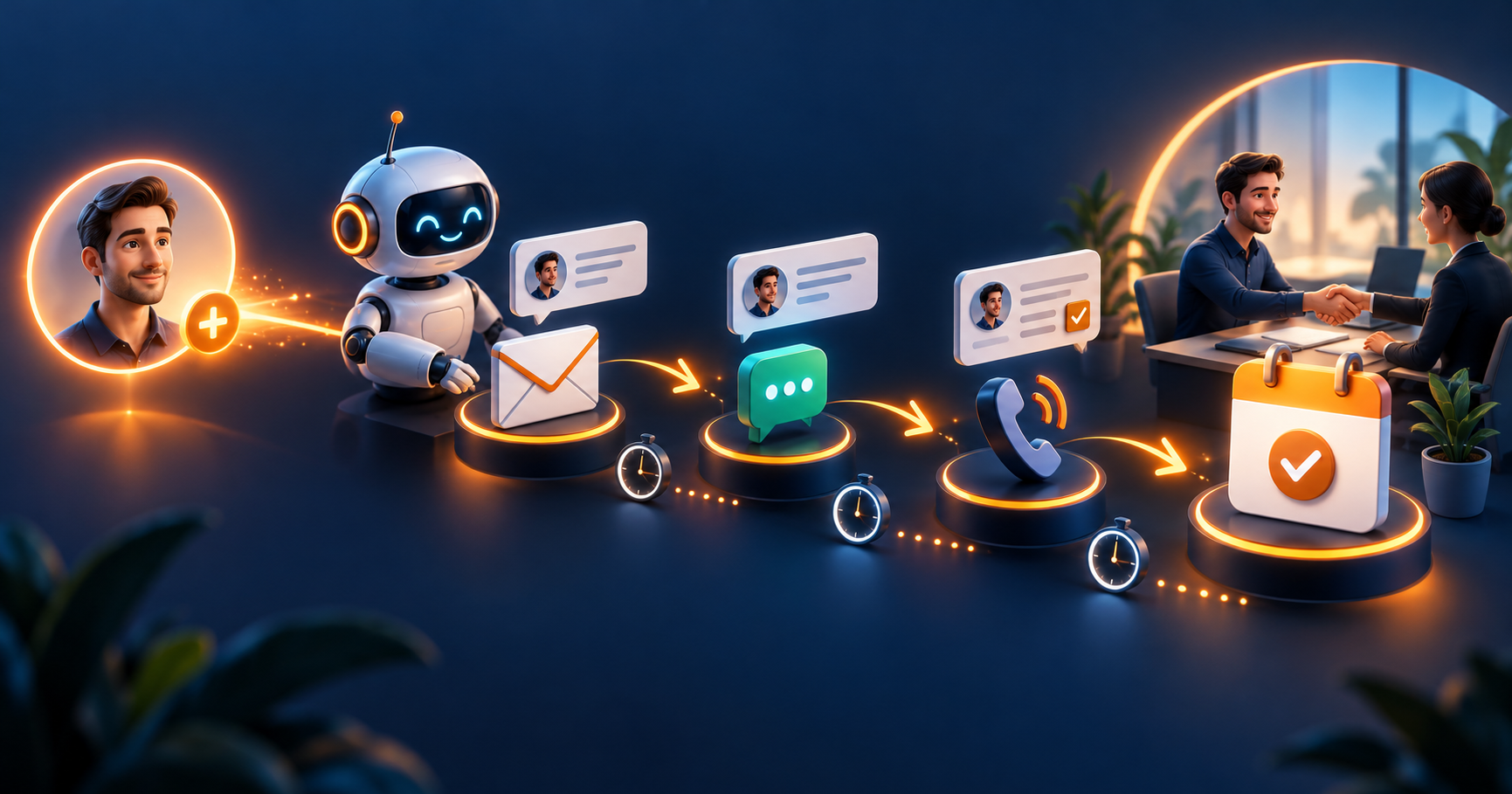
Begin with an immediate confirmation and owner notification. If there is no reply, send a helpful clarification or next step. Later follow-up can provide a relevant answer, appointment option or human contact.
Use timing appropriate to urgency and buying cycle. Emergency services, consultations and enterprise purchases should not share the same sequence.
Personalization and context
Use reliable fields such as requested service, location, source and appointment status. Do not insert empty or unverified values. The CRM should show the employee what messages were sent and why.
Lead Connector automated lead follow-up combines CRM data, WhatsApp, email, SMS, tasks and pipelines so follow-up stays connected to the opportunity.
Stop conditions and human takeover
Stop automation when a lead replies, books, opts out, becomes unsuitable, purchases or is manually placed into another stage. Create escalation for high-value, urgent, negative or complex responses.
The transition should give the employee the complete conversation and a clear task. Customers should not receive overlapping automated and human messages.
Channel selection
Use email for detail, permitted messaging channels for concise updates and calls for nuance. Respect customer preferences, consent, quiet hours and platform rules.
Do not multiply the same message across every channel. Coordinate channels around customer progress.
Measurement
Track first useful response, contact rate, reply rate, bookings, attendance, qualification, conversion, opt-outs and complaints. Review performance by source, sequence and customer segment.
Also monitor leads still open without a future task. Follow-up automation should reduce forgotten opportunities, not simply increase message counts.
Practical implementation
Map one enquiry type, write a short sequence, define ownership and stop rules, test every branch and review live replies during the first week. Improve wording from genuine customer questions.
Automation should make the business more responsive while leaving room for judgment, empathy and expertise.