How to Increase Sales: 15 Practical Strategies for Service Businesses
Increase sales by improving lead response, qualification, appointments, quote follow-up, retention and referrals across one measurable customer journey.
How can a service business increase sales?
Increasing sales is not only about generating more leads. A service business can grow revenue by responding faster, converting more existing enquiries, improving appointment attendance, following up on estimates, retaining customers and earning more referrals. The most reliable strategy is to improve the complete customer journey rather than chase one marketing tactic.
This guide presents a practical system you can measure in a CRM.
1. Define the right customer
Describe the problems, locations, budgets and buying situations that make a prospect suitable. Clear targeting improves advertising, qualification and sales conversations. Record the traits of won and lost customers so the definition improves with evidence.
2. Make the offer easy to understand
Explain the result, who the service is for, what is included and the next step. Avoid vague claims. Use specific proof, process details and realistic expectations. A visitor should know whether to call, request a quote, book or buy.
3. Capture every enquiry in one CRM
Connect forms, calls, chat, WhatsApp, email, social messages, calendars and supported advertising sources. Preserve the original source and prevent duplicates. Every legitimate lead needs an owner, status and next action.
Lead Connector CRM connects customer records with conversations, pipelines, appointments and automation.
4. Improve lead response time
High-intent prospects often contact several providers. Send a transparent acknowledgement immediately, route the lead correctly and create a human response deadline. Measure the first useful response—not merely an automatic message.
5. Qualify without creating friction
Ask only what is necessary to determine fit, urgency and next steps. Qualification may include need, service area, timing, authority and budget range. Use forms or automation for simple facts and keep nuanced discovery human.
6. Create a repeatable sales process
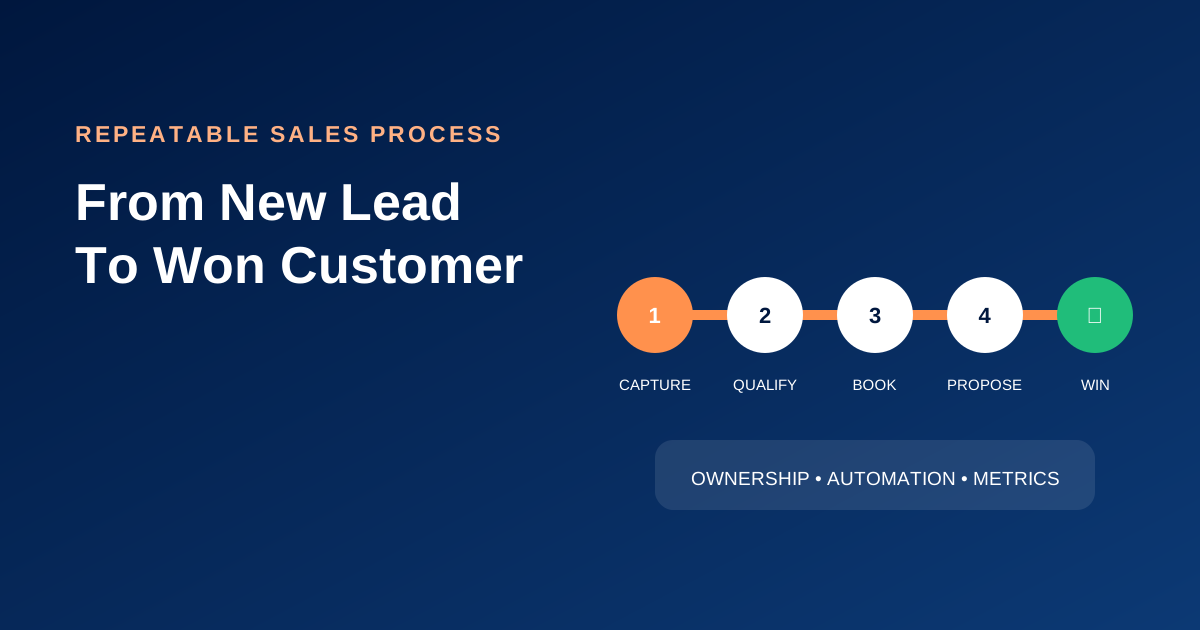
Define observable stages such as New Enquiry, Contacted, Qualified, Appointment Booked, Quote Sent, Decision and Won or Lost. Establish entry criteria, ownership and the required next action for each stage.
7. Make booking effortless
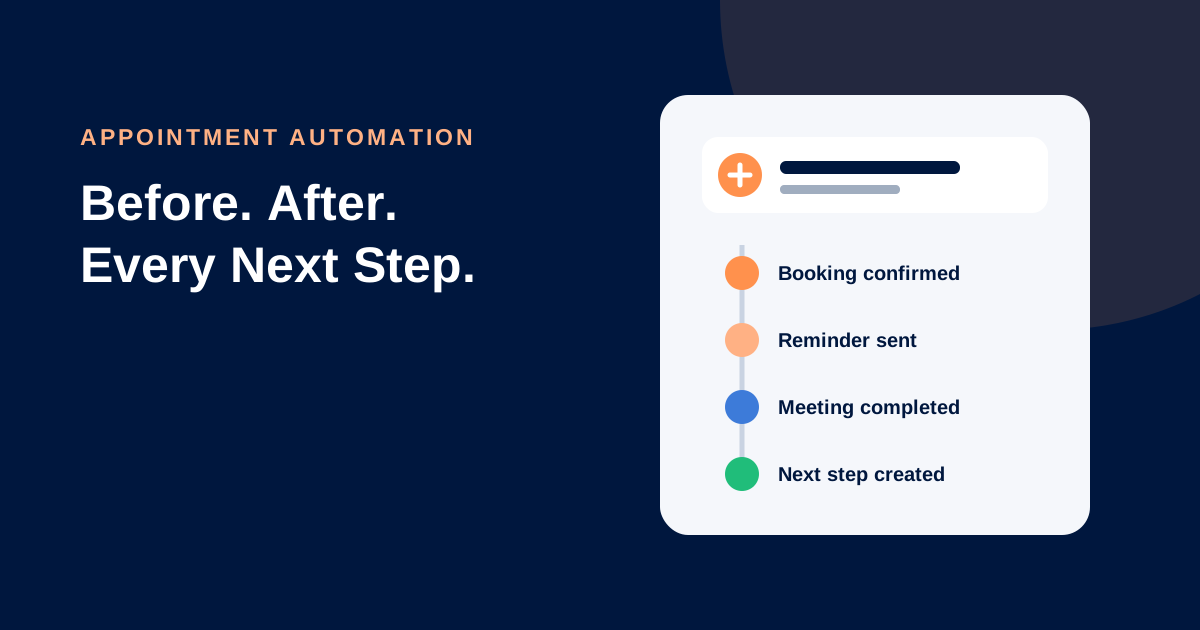
Show valid availability, collect essential intake information and send confirmations. Offer rescheduling rather than forcing a customer to call. Connect appointments to the contact and opportunity so the team understands the commercial context.
8. Reduce no-shows
Use well-timed reminders, preparation instructions, time-zone clarity and a simple rescheduling option. Escalate important appointments to a person when the customer has not confirmed. Track attendance by source and appointment type.
9. Follow up with genuine value
Do not repeatedly ask whether the prospect is ready. Answer an unanswered question, summarize the requirement, share useful proof or propose a clear next step. Coordinate email, calls and permitted messaging so customers do not receive overlapping outreach.
10. Follow up on estimates consistently
Record when an estimate is sent, its value and its decision deadline. Schedule a confirmation, a useful check-in and a final decision request. Stop automation when the customer replies, accepts, declines or needs a revised quote.
11. Use lost reasons to improve
Record a short, meaningful lost reason: price, timing, no response, unsuitable service, competitor, location or internal capacity. Review patterns by source, service and salesperson. Lost reasons turn failed deals into process insight.
12. Increase average customer value
Offer relevant upgrades, bundles, maintenance, subscriptions or complementary services only when they improve the outcome. Use customer history rather than generic promotions. Measure contribution margin, not revenue alone.
13. Generate repeat business
Create service-based check-ins, renewal reminders and rebooking journeys. A completed transaction should trigger appropriate onboarding, support and future contact—not disappear from the system.
14. Ask for reviews and referrals
Request feedback after a successful milestone. Route unhappy customers to service recovery before requesting a public review. Make referrals easy and track the resulting lead back to the advocate where appropriate.
15. Measure the entire revenue journey
Monitor lead volume, source, response time, contact rate, qualification, bookings, attendance, estimates, win rate, sales cycle, average value, repeat purchases and referrals. One metric cannot diagnose the whole system.
| Problem | Metric | First action |
|---|---|---|
| Many leads, few conversations | Contact rate | Improve speed, routing and channel choice |
| Many bookings, low attendance | Show rate | Improve reminders and rescheduling |
| Many estimates, few wins | Quote-to-sale rate | Review qualification, value and follow-up |
| Good sales, weak profit | Contribution margin | Review pricing and delivery cost |
| Few repeat customers | Retention or rebooking | Add post-service journeys |
A 30-day sales improvement plan
During week one, audit lead sources, stages and response time. In week two, repair capture, ownership and appointment reminders. In week three, introduce estimate follow-up and lost reasons. In week four, review the numbers and improve the largest bottleneck.
Avoid changing everything simultaneously. A controlled change shows which improvement created the result.
Frequently asked questions
What is the fastest way to increase sales?
For many established businesses, the fastest opportunity is improving response and follow-up for leads already being generated. The correct priority depends on where customers currently drop out.
Can CRM increase sales?
A CRM does not create demand by itself. It can improve capture, response, accountability, pipeline visibility, appointment follow-up and retention, which can increase the percentage of opportunities converted.
Should I automate the complete sales process?
Automate predictable administration and timely reminders. Keep discovery, advice, negotiation, complaints and important exceptions under human control.
Turn more demand into revenue
Lead Connector connects acquisition, CRM, conversations, calendars, pipelines, payments, reviews and retention. Explore Lead Connector pricing or talk to the team about the largest sales bottleneck in your process.